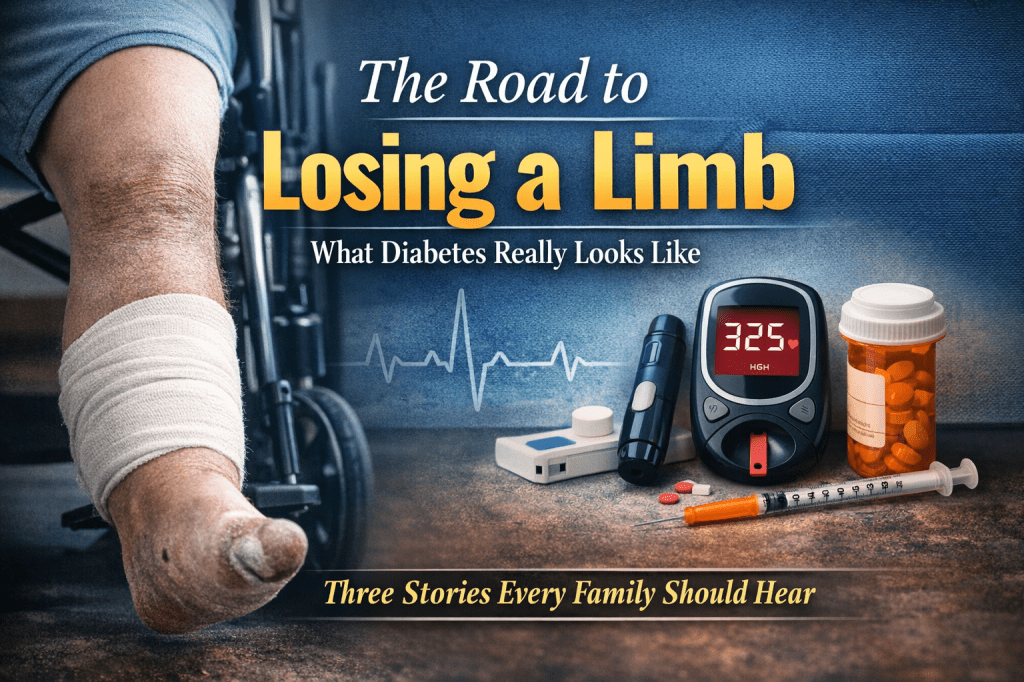
Diabetes doesn’t start with an amputation. It starts with habits — the small, everyday choices that slowly push blood sugar higher and higher until the body can’t keep up.
For many people, the warning signs are quiet:
- sugar building up in the bloodstream
- glucose staying high after meals
- A1C creeping upward
- numbness or tingling in the feet
- slow‑healing cuts
- swelling, infections, or changes in skin color
These changes don’t happen overnight. They build over months and years. And when they’re ignored, the consequences can be life‑changing.
Today, I want to walk you through three stories — one about the danger, one about a celebrity who came close to a coma, and one about a mother fighting to save her leg. Each one carries the same message: Pay attention early. Take care daily. Don’t wait until it’s too late.
When Bad Habits Become a Medical Emergency
High blood sugar doesn’t just affect energy or mood — it affects circulation, nerves, and the body’s ability to heal. Over time:
- arteries narrow
- blood flow slows
- infections spread faster
- wounds don’t close
- tissue begins to die
This is how people end up facing amputations.
Most amputations linked to diabetes begin with something small:
- a blister
- a cut
- a sore spot on the foot
- a shoe rubbing the wrong way
But when glucose stays high, the body can’t fight infection or repair tissue. What should have been a simple fix becomes a crisis.
Damon Wayans: A Celebrity Who Came Close to a Diabetic Coma
Many people know Damon Wayans for his comedy — but fewer know how close he came to a diabetic coma during his touring years. He talked publicly about ignoring early symptoms, eating whatever was available on the road, and living under constant stress. His blood sugar swings left him exhausted and confused until doctors warned him he was dangerously close to slipping into a coma.
His story reminds us that diabetes doesn’t care about fame or success — anyone can struggle with blood sugar, and lifestyle changes matter.
That same warning shows up in everyday life too. In our Staying Healthy Together feature, Tingling Toes: More Than Just a Nuisance, we talked about how numbness, tingling, and slow healing are often the first signs of nerve damage caused by high blood sugar. These small sensations are the body’s early alarm — a chance to act before things turn serious.
The ABC News Story: A Mother Fighting to Save Her Leg
ABC News aired a powerful 9‑minute segment about a Memphis mother whose diabetes had damaged her circulation so severely that doctors were preparing her for amputation.
Her foot wasn’t healing. Her blood vessels were blocked. Her family was terrified.
But the story also highlighted new FDA‑approved procedures that can restore blood flow and give patients a chance to heal — something that didn’t exist years ago.
This segment is emotional, educational, and a wake‑up call for anyone living with diabetes.
Watch the full ABC News video here:
What These Stories Teach Us
Whether it’s a celebrity, a mother on the news, or someone in our own community, the message is the same:
- Don’t ignore symptoms
- Get your A1C checked
- Protect your feet
- Monitor your numbers
- Ask questions early
- Small daily habits matter
Diabetes is manageable — but only when we stay aware and take action before complications begin.
A Trusted Resource for Support
For education, tools, and guidance, visit the American Diabetes Association: https://diabetes.org
They offer:
- meal planning
- risk tests
- foot care guides
- prevention tips
- support for families and caregivers
A Helpful Amazon Find for Daily Blood Sugar Awareness
One of the most powerful ways to prevent complications is simply knowing your numbers. A reliable blood glucose kit helps you stay ahead of rising sugar levels before they turn into nerve damage, circulation problems, or slow‑healing wounds.
Here’s a senior‑friendly option many people use because it’s simple, accurate, and easy to read:
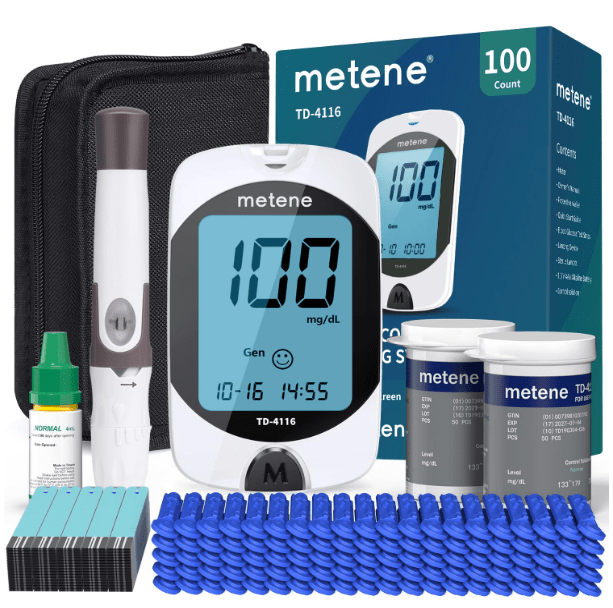
Metene TD-4116 Blood Glucose Monitor Kit.
As an Amazon Associate, I earn from qualifying purchases. Prices and availability may change at any time.
Keeping a kit at home — and using it consistently — can make the difference between catching a problem early and missing the warning signs.
Closing Thought
Staying healthy isn’t about fear — it’s about awareness. It’s about catching things early, taking small steps, and supporting each other along the way.
We’re not just sharing stories. We’re building a community that learns, grows, and stays healthy together.
 Staying Healthy Together
“Your insight could inspire someone’s healing—share below. You can use Markdown to format your reply!”